

There’s a specific moment a lot of people remember: standing in a library aisle, overwhelmed by a wall of finance titles that all promise the same vague thing.
I’ve stood there more than once, unsure which book was actually worth the time.
Most of those books didn’t earn a spot on my shelf.
The seven books on this list did.
Each one shifted something specific for me.
Not just “spend less, save more” repackaged for the hundredth time, but an actual change in how I approached money, risk, or time.
This is a short, honest list of financial freedom books worth your reading hours, with a note on what each one is actually good for.
Why Most Finance Books Blend Together
Walk into any bookstore’s finance section and the covers start to look interchangeable.
Bold fonts, a dollar sign, a promise to change your life in thirty days.
Most books in this space repeat the same handful of ideas. Budget. Save. Invest early. Avoid debt.
Good advice, but not exactly new after the third or fourth book covering it.
The titles below earned their place because each one approaches money from a distinct angle. One is about psychology. Another is about systems. A few are about mindset shifts that no spreadsheet can teach on its own.
The 7 Books
Your Money or Your Life by Vicki Robin
This book reframes money entirely. Not as dollars, but as units of your life energy. Every purchase gets measured against the hours of work it actually cost you. That single shift changes how casually you spend.
Best for: Anyone who wants to fundamentally rethink their relationship with spending, not just tighten a budget.
The Psychology of Money by Morgan Housel
Housel’s central argument is that financial success has less to do with what you know and more to do with how you behave.
The book is built around short, standalone stories rather than a rigid framework. That structure makes it easy to read in pieces.
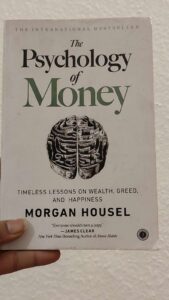
Best for: Readers who already understand the basics of investing but struggle with the emotional side of money decisions.
Rich Dad Poor Dad by Robert Kiyosaki
Whatever you think of Kiyosaki’s later ventures, this book’s core lesson holds up.
The difference between assets and liabilities, and why most people confuse the two, forms the foundation of the whole book.
It was many readers first real introduction to thinking about money as a system rather than a paycheck. One of the Best financial freedom books ever published for beginners.
Best for: Complete beginners who need a foundational mental model before diving into anything more advanced.
The Simple Path to Wealth by JL Collins
Originally written as letters to his daughter, this book strips investing down to its most essential, least complicated form.
Low-cost index funds, long time horizons, and avoiding unnecessary complexity make up most of the advice here.
Best for: Anyone who feels overwhelmed by investing options and wants one clear strategy instead of twelve competing ones.
Financial Freedom by Grant Sabatier
Sabatier writes from experience, having gone from a few dollars in his bank account to financial independence in five years.
The book leans heavily into aggressive saving and multiple income streams.
That pace won’t suit everyone, but the strategies are laid out with real specificity.
Best for: Readers who want an intense, detailed roadmap rather than general philosophy.
I Will Teach You To Be Rich by Ramit Sethi
Sethi’s approach skips guilt-based budgeting entirely. Instead, he automates the boring decisions and spends freely on what he actually values.
The tone is direct, occasionally blunt, and refreshingly free of the shame that runs through a lot of personal finance writing. One of the Best financial freedom books.
Best for: People who’ve tried restrictive budgeting before and burned out on it.
The Millionaire Next Door by Thomas J. Stanley and William D. Danko
Based on years of research into actual millionaires, this book dismantles the image of wealth as flashy spending. Most people studied lived well below their means.
Many built wealth quietly, often driving older cars and living in modest homes.
The research behind this one is what sets it apart from most books in the category.
Stanley and Danko surveyed and interviewed hundreds of high-net-worth individuals rather than relying on anecdote or theory, and the patterns that emerged consistently contradicted popular assumptions about what wealthy people actually look like day to day.
Best for: Anyone who equates visible spending with financial success and needs that assumption challenged.
How to Get the Most Out of Reading Them
Reading a stack of money books back to back rarely sticks. A slower, more deliberate approach tends to work better.
Pick one idea per book and actually implement it. Finish Your Money or Your Life, then spend a week tracking your spending in terms of hours worked.
Move to the next book only after that idea has actually changed a habit, not just your thinking.
Read in an order that matches your current stage. Beginners tend to get more out of Rich Dad Poor Dad or The Simple Path to Wealth first.
Readers already investing consistently often benefit more from The Psychology of Money, since it addresses behavior rather than mechanics.
Take notes on what you disagree with, not just what resonates. Several of these authors hold strong, sometimes contradictory opinions.
Sitting with the disagreement usually teaches you more about your own values than blindly agreeing with everything on the page.
Revisit at least one book annually. These titles tend to land differently depending on where you are financially.
A book that felt basic five years ago can reveal something new once your circumstances have changed.
Debt payoff advice reads differently once you’re debt-free, and investing guidance lands differently once you actually have money to invest.
Pair reading with a specific action, not just note-taking. A book about assets and liabilities means little until you actually sit down and categorize your own.
Give yourself one concrete task per book, something you can point to and say you actually did differently afterward.
Discuss what you’re reading with someone else working toward similar goals. Talking through a book’s ideas out loud, even briefly, tends to surface disagreements and blind spots that reading alone doesn’t.
A short conversation about why an idea did or didn’t resonate often clarifies your own financial priorities faster than another chapter would.
What These Books Get Right That Generic Advice Misses
Most short-form money advice online repeats the same three tips endlessly: track your spending, build an emergency fund, invest early.
All true, all useful, and all things you’ve probably read a hundred times already.
Books have room these quick tips don’t.
A full-length book can spend forty pages walking through why a specific mindset shift matters, backed by research, personal story, or a framework you can actually apply to your own numbers.
That depth is exactly why a handful of well-chosen books tends to move people further than scrolling through another listicle of quick money hacks.
How These Authors Actually Disagree With Each Other
Part of what makes reading several of these books worthwhile is that the authors don’t always agree, and that friction is useful.
Sabatier’s approach in Financial Freedom leans aggressive: save as much as possible, as fast as possible, and treat lifestyle inflation as the enemy.
Sethi’s I Will Teach You To Be Rich pushes back on that instinct directly, arguing that guilt-driven frugality burns people out.
He makes the case that spending freely on what you value, while automating everything else, holds up better over years rather than months.
Neither author is wrong. They’re solving for different things. Sabatier optimizes for speed to financial independence.
Sethi optimizes for a sustainable relationship with money that doesn’t feel like constant self-denial.
Reading both back to back makes that tension obvious, and figuring out where you personally land between the two extremes is often more useful than fully adopting either philosophy wholesale.
The same kind of contrast shows up between Kiyosaki’s asset-focused framework in Rich Dad Poor Dad and Collins’s deliberately simple index-fund approach in The Simple Path to Wealth.
One pushes you toward actively acquiring income-generating assets.
The other argues that simplicity and consistency beat cleverness over a long enough timeline.
Both have produced real results for real people, which is exactly why it’s worth reading more than one perspective before committing to a single strategy.
FAQ: Financial Freedom Books
What is the best financial freedom book for beginners?
Rich Dad Poor Dad and The Simple Path to Wealth are generally considered the most approachable starting points for someone just beginning to think seriously about money.
Which finance book focuses most on mindset rather than strategy?
The Psychology of Money and Your Money or Your Life both lean heavily into mindset and behavior rather than specific investment tactics, making them strong choices for readers who already understand the basics.
Are older personal finance books still relevant today?
Yes, for the most part. Concepts like assets versus liabilities, living below your means, and automating savings haven’t changed even though specific investment products and tax rules have evolved since some of these books were written.
Should these books be read in a specific order?
Starting with a foundational title like Rich Dad Poor Dad or The Simple Path to Wealth, then moving into behavior-focused books like The Psychology of Money, tends to build understanding in a logical progression.
Final Thought
These seven financial freedom books each earn their place for a different reason. One offers a mindset shift. Another hands you a concrete system.
A few include research that challenges what you assumed about wealth. None of them will fix your finances just by sitting on a shelf, but picking even one idea from each and actually applying it tends to move the needle more than reading twenty books passively ever will.
If you’re looking for a concrete next step, our 52-week money challenge guide pairs well with the habits several of these authors describe.
Discover more from Escape Cents
Subscribe to get the latest posts sent to your email.
1 thought on “7 Inspiring Financial Freedom Books”