
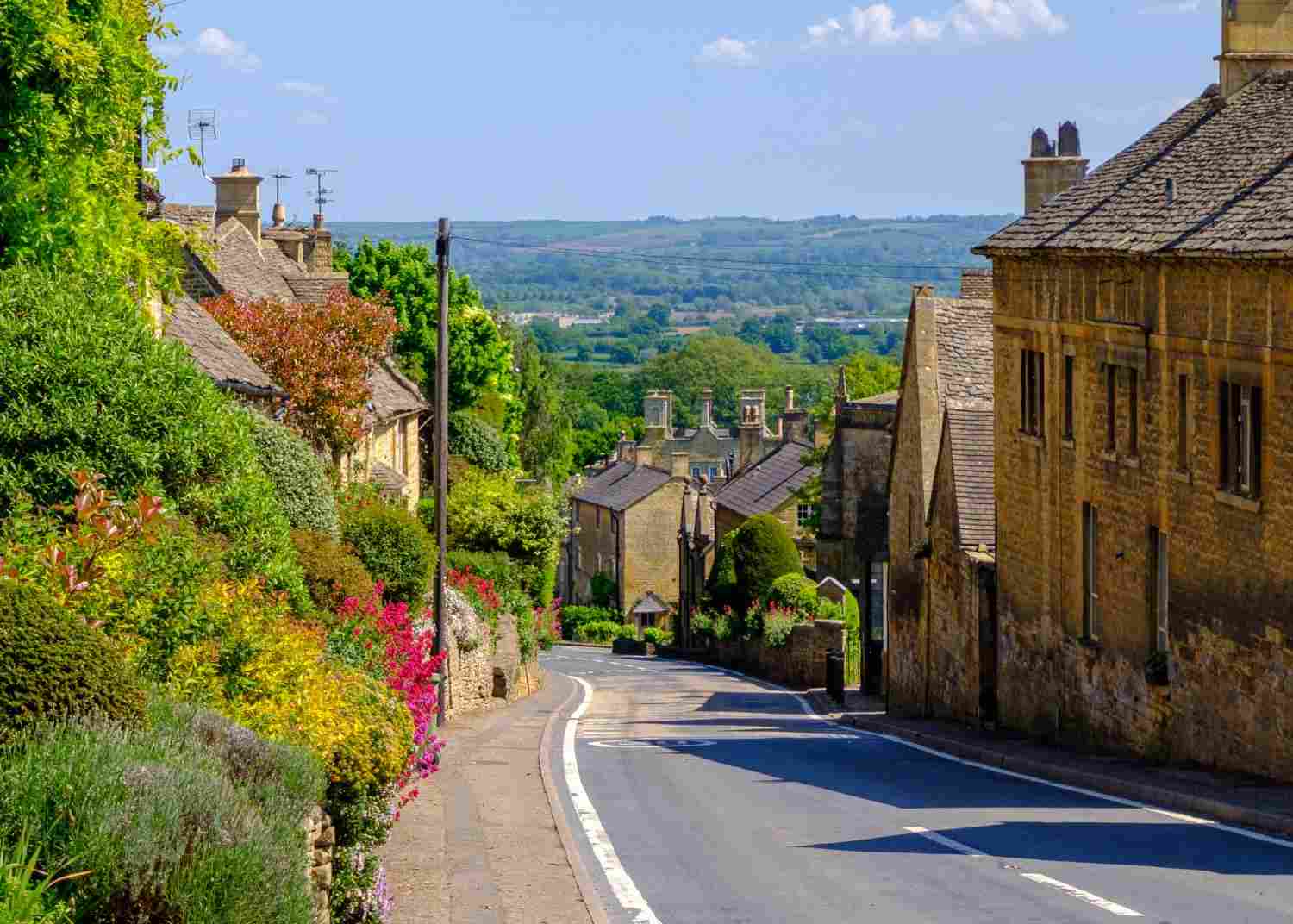
Smoke curled from a chimney above a thatched roof. Somewhere behind a low stone wall, a dog barked twice and went quiet.
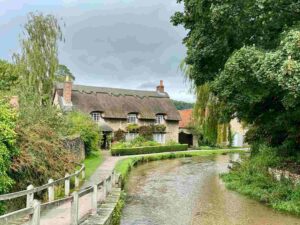
I’d pulled off the main road looking for a place to eat lunch and found Bibury instead, a village so precisely picturesque it felt staged. It wasn’t.
This is just what parts of England still look like, if you know where to turn off the motorway.
England hides dozens of villages like this, tucked into valleys and coastlines the major tour routes skip entirely.
This list gathers thirteen old English villages worth building a detour around, organized by region so you can actually plan a route rather than hunt for pins on a map.
Why These Villages Rarely Make the Main Itinerary
Most first-time visitors to England build a trip around London, maybe Bath or Oxford, and call it done.
That makes sense, given how much those cities offer.
But the countryside villages get skipped constantly.
Reaching them usually means renting a car or catching a rural bus that runs a handful of times a day.
That inconvenience is precisely what’s kept these places from turning into theme parks.
Spend an hour in one of these villages and something shifts. Shops close early. Everyone seems to know everyone.
It’s a rhythm entirely unlike London’s pace, and it’s a big reason these smaller towns are worth the extra planning.
The Cotswolds
Bibury
William Morris reportedly called Bibury the most beautiful village in England.
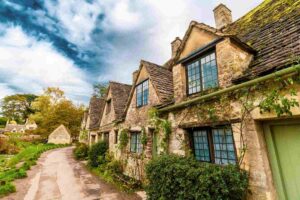
The row of seventeenth-century weavers’ cottages along Arlington Row does most of the convincing on its own.
Golden Cotswold stone glows warmly at golden hour, when the crowds thin out considerably.
Castle Combe
Frequently used as a film location, Castle Combe has a market cross and a medieval church.
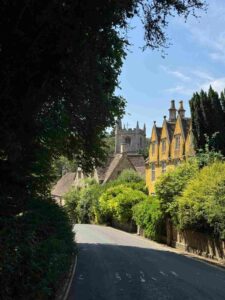
A stream runs straight through its center.
It’s compact enough to see fully in an hour, though lingering over a pub lunch tends to be the better move.
Bourton-on-the-Water
Nicknamed the Venice of the Cotswolds, Bourton-on-the-Water has the River Windrush running shallow through its middle.
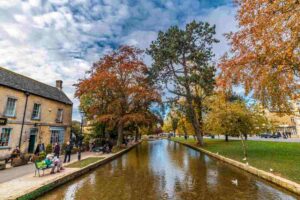
A series of low stone footbridges crosses it at several points.
It draws more visitors than some other Cotswolds stops, so an early morning visit avoids the worst of the crowds.
Yorkshire Dales and the North
Grassington
Grassington sits at the edge of the Yorkshire Dales.
Its cobbled square and stone cottages have doubled as a filming location for period dramas more than once.
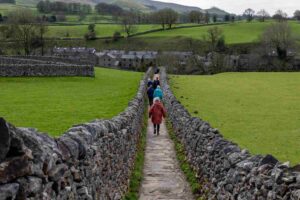
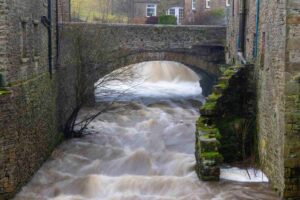
The surrounding walking trails through limestone countryside make it a strong base for a day or two of hiking.
Hawes
Home to the Wensleydale Creamery, Hawes combines a working market town feel with genuinely dramatic Dales scenery.
The countryside opens up right at its edges.
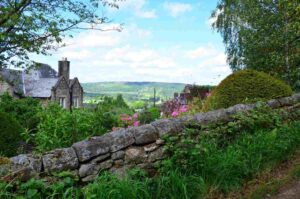
The weekly Tuesday market has run continuously since the 1300s, longer than most countries have existed as nations.
Robin Hood’s Bay
Tucked into a cliffside on the North Yorkshire coast, Robin Hood’s Bay tumbles down narrow, winding lanes toward the sea.
Its cottages were once famously connected by smugglers’ tunnels.
Cars can’t reach the lower village at all, so the walk down, and the steeper walk back up, is unavoidable.
Coastal Villages
Clovelly
Privately owned for centuries, Clovelly charges a small entry fee.
It goes directly toward maintaining its extraordinarily steep, cobbled main street.
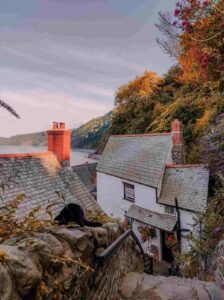
No cars are allowed here. Donkeys and sledges historically hauled goods up and down, a detail still visible in the village’s design today.
Polperro
A working fishing village in Cornwall, Polperro packs whitewashed cottages into a narrow harbor inlet.
Boats still go out most mornings.
Park at the top of the village and walk down, since car access to the harbor itself is heavily restricted.
Lynmouth
Set where the East and West Lyn rivers meet the sea, Lynmouth pairs harbor views with Exmoor’s dramatic coastal cliffs close by.
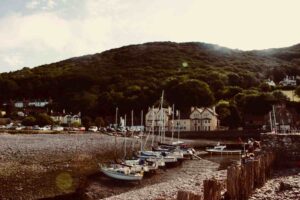
A Victorian water-powered cliff railway still connects it to the hilltop village of Lynton above.
Villages Near London
Lavenham
Once one of England’s wealthiest wool towns, Lavenham’s crooked, half-timbered medieval buildings lean at angles that look almost intentional.
It sits close enough to London for an easy day trip.
That makes it one of the more accessible stops on this list.
Rye
Perched on a hill in East Sussex, Rye combines cobbled Mermaid Street with genuine literary history.
Writers like Henry James were drawn here for the atmosphere alone.
Timber-framed buildings and antique shops fill the compact town center.
Chilham
A small, tightly preserved village near Canterbury, Chilham centers around a square framed by Tudor buildings and a Jacobean castle.


It rarely appears on standard itineraries.
That keeps it noticeably quieter than better-known Kent villages.
Finchingfield
Often photographed for its village green, duck pond, and windmill visible on the hillside above, Finchingfield sits in rural Essex, less than two hours from central London.
Weekend crowds stay light here compared to the Cotswolds, making it a solid pick for a quieter, more spontaneous day trip.
How to Route a Trip Between Them
Trying to visit all twelve in a single trip isn’t realistic. It isn’t really the goal either. Pick a region and go deeper instead.
Group by geography, not list order. The Cotswolds villages pair naturally together as a two- or three-day loop. Yorkshire’s Grassington, Hawes, and Robin Hood’s Bay work well as their own northern leg. Treat the coastal villages in Devon and Cornwall as a separate southwestern trip.
Base yourself centrally within each region. A single well-placed hotel or cottage rental usually puts three or four villages within a manageable drive. That saves you from repacking every night.
Rent a car if you’re serious about reaching these villages. Public transport connects the larger towns reasonably well. Many of the smaller, more remote villages sit well off any train line, though.
Time your visits around weekday mornings when possible. Weekends bring noticeably heavier crowds to the well-known stops like Bibury and Castle Combe, while a Tuesday or Wednesday visit often means having a village largely to yourself.
Build in unscheduled time. A slow pub lunch tends to be more memorable than rushing through four villages in one day. So does an unplanned wander down a side lane.
What Makes These Villages Feel Different
There’s a specific texture to daily life in these small towns.
London, Bath, and even Oxford simply can’t replicate it, however charming their own historic centers might be.
Population size matters here more than people expect.
Most of these villages count residents in the hundreds, not the hundreds of thousands.
That scale changes how a place feels underfoot.
You pass the same person twice on one short walk.
You overhear the same handful of conversations drifting from open pub doors.
Tourism infrastructure stays lighter too, at least outside the busiest few stops like Bibury and Castle Combe.
Fewer chain shops, fewer identical souvenir stands.
What remains tends to serve the people who actually live there year-round.
That usually means better, more honest food, and a warmer welcome when you stop in for a pint or a pot of tea.
None of this makes these villages better than England’s famous cities. It simply makes them a different kind of trip.
They’re worth experiencing on their own terms, not as a smaller add-on to a London-centered itinerary.
What to Pack for Visiting English Villages
England’s weather shifts quickly, and village visits often involve more walking than a typical city day, so packing right makes a real difference.
Waterproof shoes matter more than nearly anything else on this list.
Cobbled lanes and countryside paths turn slick fast after rain, which is common in most of these regions even outside winter.
A packable rain layer earns its space in any bag too, since a clear morning in the Cotswolds can turn drizzly by lunch without much warning.
Cash still matters in some of the smaller villages, particularly tea rooms and independent shops that haven’t fully switched to card-only payment.
It’s worth carrying a bit, just in case, especially in the more remote Yorkshire and coastal stops.
A basic map app with offline capability helps too, since signal can drop out entirely in some of the deeper Dales and Cornish valleys.
Don’t rely purely on real-time navigation once you’re off the main roads.
FAQ: Magical Old English Villages
What is the most beautiful village in England?
Bibury in the Cotswolds is one of the most consistently mentioned candidates. Castle Combe and Robin Hood’s Bay both come close, depending on personal taste.
Are these English villages easy to reach without a car?
Some, like Lavenham and Bourton-on-the-Water, are reachable by train and local bus with some planning. More remote villages like Grassington and Hawes are considerably easier with a rental car.
What is the best time of year to visit English villages?
Late spring through early autumn offers the mildest weather and longest daylight hours. Popular spots like Bibury and Castle Combe do get noticeably busier during summer school holidays, though.
How many days do you need to see the Cotswolds villages?
Two to three days allows a relaxed pace across Bibury, Castle Combe, and Bourton-on-the-Water. That leaves time for a slower afternoon in whichever village you enjoyed most.
Final Thought
These twelve old English villages each earn their place for a different reason. Golden stone cottages. Cliffside fishing harbors.
A market square that’s barely changed in centuries.
Pick one region and give it a few unhurried days. You’ll come away with a version of England that most first-time visitors never see.
If you’re planning a similar detour through small towns, our guide to fairytale villages in Italy covers the same kind of unhurried, off-the-main-route travel.
Discover more from Escape Cents
Subscribe to get the latest posts sent to your email.